R Ashwin Ends His IPL Career

By Crick tv
Created at Oct 11, 2025 11:41 AM
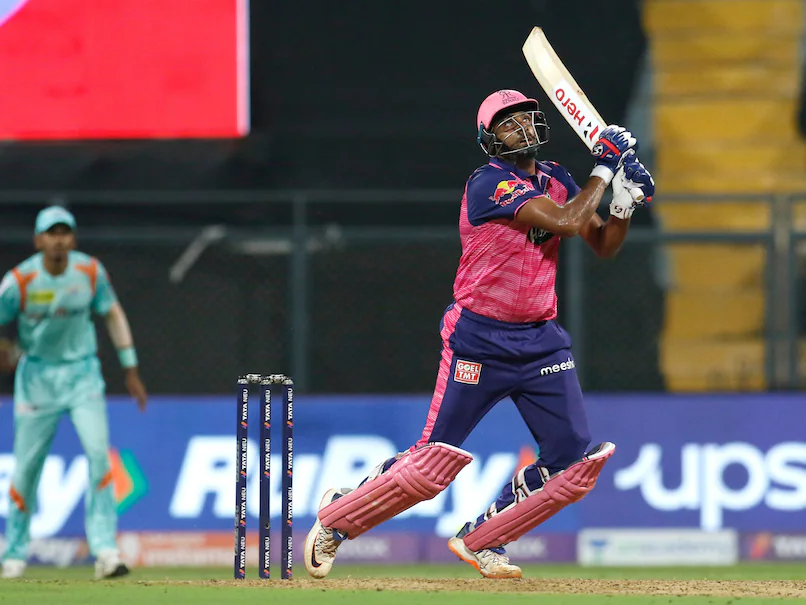
One of India’s shrewdest and most influential cricketers, Ravichandran Ashwin, has made the formal announcement of his retirement from the Indian Premier League (IPL), marking the end of an illustrious chapter spanning more than a decade and a half. The experienced off-spinner, who arrived at the league in the first season in 2009, has a legacy characterized by consistency, leadership, and innovation — attributes that placed him among the most admired players in the history of the tournament.
Ashwin started his IPL career with the Chennai Super Kings (CSK), where he attained prominence under the leadership of MS Dhoni. His cunning application of flight, variations, and aggressive style of bowling in the Powerplay made him an invaluable asset to CSK’s dominance in the IPL’s early years. Between 2010 and 2015, Ashwin was central to CSK’s repeated championship wins, providing decisive performances in tight games and establishing himself as one of the most consistent spinners in the competition.
While CSK was suspended in 2016 and 2017, Ashwin shifted to Rising Pune Supergiant and then captained Kings XI Punjab (Punjab Kings currently) from 2018 to 2019. His captaincy stint, though brief, was a testament to his acumen with the game — he never hesitated to make unorthodox choices, be it opening the bowling, placing aggressive fields, or infamously ‘mankading’ Jos Buttler in 2019, an act that caused controversy but asserted his belief in playing by the book and winning smartly.
Ashwin’s resilience has been the driving force behind his IPL success. In an age where batsmen have developed at a rapid pace, his ability to keep up with the times was unparalleled. With the carrom ball, arm ball, or even the finer nuances of pace and seam placement, Ashwin kept changing and reinventing himself. Even towards the end of his career, when he played for Rajasthan Royals, he surprised everyone with creative strategies — from pushing himself up the order to trying new angles with the ball.
In 200+ IPL games, Ashwin took more than 180 wickets, with an economy rate that showed control and accuracy. Added to these figures was the strategic play he introduced into any side. Captains would look to him not just for taking a wicket but also for counsel since they knew his cricketing mind was the best. His on-field presence, characterized by composure and authority, would often dictate games even when he was not directly contributing to wickets.
In his retirement message, Ashwin was thankful to the IPL for molding his career. “The IPL has been a turning point in my cricketing life. It provided me with the platform to compete against the world’s best and learn day in and day out. I’m proud of what I’ve done and grateful to all the franchises, teammates, and fans who supported me,” he stated. He also
indicated that the choice was motivated by a wish to concentrate on guiding and shaping young spinners of all genres.
Tributes flowed in from throughout the cricketing community. MS Dhoni referred to Ashwin as “a rare combination of skill and intelligence,” while Shane Watson described his “unparalleled knowledge of T20 dynamics.” The management of Rajasthan Royals applauded him as “a mentor, leader, and thinker who took the dressing room culture to a higher level.”
As Ashwin departs the IPL, he leaves behind not only dazzling statistics, but a legacy of innovation, bravery, and cricketing brilliance. His departure heralds the end of an era in Indian cricket — one that was characterized by evolution, experimentation, and excellence. Though fans will miss his guileful spells and on-field arguments, his legacy will certainly live on in the next generation of Indian spinners who grew up watching the master in action.
Ravichandran Ashwin might have played his last IPL game, but his influence on the league — and on the sport — will be felt for years to come.