The Fascinating Journey of FIFA: From Humble Beginnings to Global Football Glory

By Crick tv
Created at Oct 06, 2025 12:43 PM
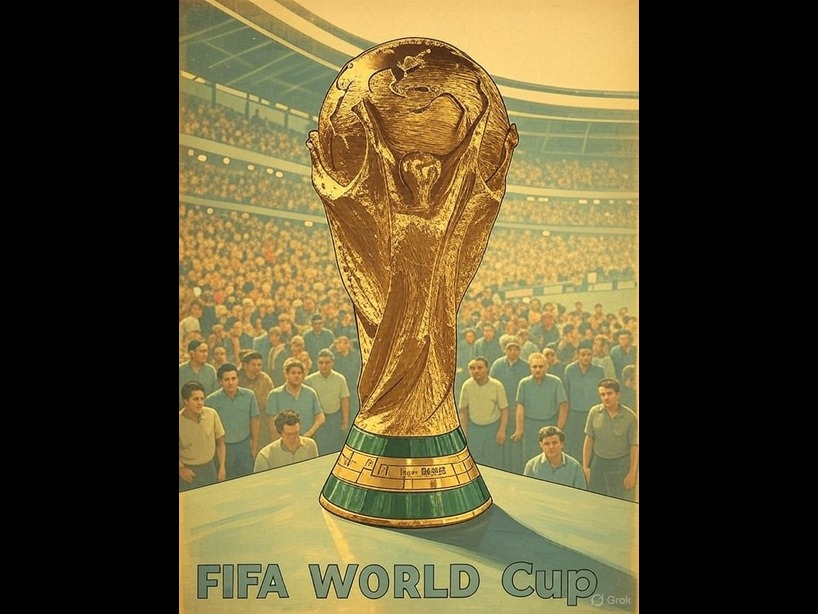
The Federations Internationals de Football Association, or FIFA as it is more commonly known, is now the absolute leader of world football. Its reach goes from the crowded streets of Rio de Janeiro to the frozen football pitches in Scandinavia, bringing together billions of people through the power of the sport's international language. But the tale of how FIFA progressed from a modest organization in early 20th-century Europe to become the greatest sporting power on the planet is one of the most remarkable tales ever told.
The Birth of a Global Dream
FIFA was established on 21 May 1904, in Paris, France, by delegates from a mere seven European countries—Belgium, Denmark, France, the Netherlands, Spain, Sweden, and Switzerland. Their objective was straightforward yet ambitious: to unify the game's rules and hold international games under a single body. Football had already gained momentum all over Europe at that time, yet there was no single governing body that could oversee matches between countries.
The early period was one of gradual advance and limited penetration. England, where modern football was born, hesitated at first to accede to FIFA, feeling that it could learn nothing from the rest of the world. But as the popularity of the game gained worldwide proportions, the necessity for an international organization became apparent. The British associations followed eventually, opening the way for the globalization of football.
The Birth of the World Cup
The turning point in the history of FIFA was in 1930 when it organized the FIFA World Cup. Led by then-president Jules Rimet, the inaugural tournament was organized in Uruguay involving only 13 nations. Owing to the difficulties of traveling and communications, the tournament was a huge success. Uruguay became the first world champion, and the World Cup took its place as football's ultimate spectacle.
As time went on, the tournament expanded in terms of size, standards, and international presence. From the humble origins in Montevideo to the multi-billion-dollar spectacle of today, the World Cup has evolved beyond an athletic competition—it's a global phenomenon that bypasses boundaries, languages, and cultures.
Post-War Expansion and Global Unity
Following World War II, FIFA's influence extended beyond South America and Europe. Africa, Asia, and the Caribbean started establishing their own football associations and eventually joined FIFA's global family. By the 1970s, with João Havelange at the helm, FIFA was an international organization. Havelange envisioned that football should reach the
remotest parts of the world, increasing the number of participants and spectators, turning the game into a global phenomenon.
FIFA also initiated efforts to make the game at grassroots levels, investing in youth development, women's football, and infrastructure. The launch of the FIFA Women's World Cup in 1991 was another landmark, highlighting the sport's universal and inclusive nature.
Challenges, Controversies, and Reforms
FIFA's own path has not been smooth sailing. Charges of corruption, political interference, and finance malpractices have marred its image over the years. The 2015 corruption scandal that resulted in long-time president Sepp Blatter's resignation was a watershed moment. The association responded by bringing in major reforms geared towards transparency, accountability, and good governance.
In spite of such obstacles, FIFA has only expanded further, leveraging technology and innovation to strengthen the game. The implementation of VAR (Video Assistant Referee), goal-line technology, and new competition structures demonstrates its resolve to adapt with the times while maintaining the authenticity of football.
A Future as Bright as Its Legacy
Now, FIFA oversees more than 200 member associations, more than the United Nations. The World Cup continues to be the most viewed sporting spectacle worldwide, and the organization's influence reaches into the farthest reaches of the globe. As football grows and changes—adopting digital media, analytics, and sustainability—FIFA's purpose remains unwavering: to make the game fully global and accessible to everyone.
From its modest origins in a tiny Parisian office to becoming the pulsating heart of world football, the history of FIFA is a tribute to the ability of sport to bring people together, create passion, and provide hope. Looking to future generations, one thing is certain—football's international brilliance will keep on shining under the guidance of FIFA.